Part 5: Dinacharya
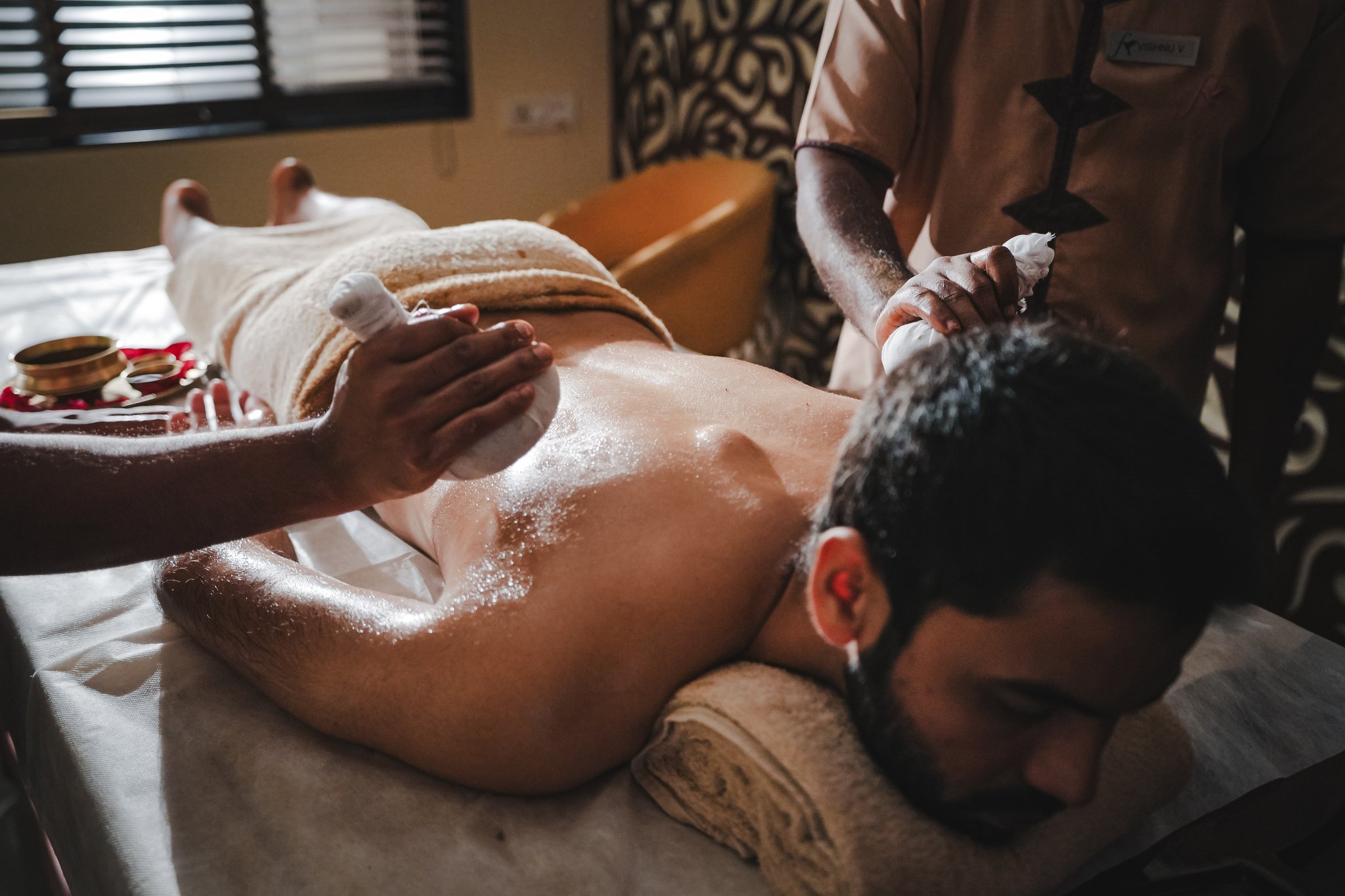
Abhyanga is one of the most loved practices in Ayurveda, and for a good reason.
It is simple.
It is grounding.
It helps the body feel safe again.
Abhyanga means oil application with gentle, intentional massage. You can receive it as a therapy in a retreat setting, and you can also do a safe, simplified version at home as part of your Dinacharya. :contentReference[oaicite:0]{index=0}
This chapter gives you a clean, realistic way to do it without turning it into a big performance.
A gentle safety note
This chapter is educational. It is not medical advice.
Keep abhyanga gentle and skip it if any of these are true:
- You have a fever, infection, or acute illness
- You have nausea, strong indigestion, or diarrhoea
- You have a fresh injury, active inflammation, or acute flare-up that feels hot and swollen
- You have an active skin infection, open wounds, or a rash that is spreading
- You are pregnant and unsure what is safe for you
- You have recently had surgery and are still healing
If you have a chronic condition, take medication, have very sensitive skin, or are under medical care, ask a qualified clinician before making this a routine.
What abhyanga is really doing
Abhyanga is not only about skin care.
In Ayurveda, oil and touch are used to support:
- dryness and roughness in the body
- nervous system settling
- circulation and warmth
- a sense of steadiness and “being in your body”
- joints that feel stiff or creaky from tension and dryness
- sleep that feels light or broken
Modern life tends to increase movement, stimulation, and dryness in the nervous system. Abhyanga is one of the simplest ways to counter that with warmth, rhythm, and care.
The biggest mistake people make
They make it too complicated.
Abhyanga works when it is repeatable.
A 5-minute routine you actually do is more valuable than a 45-minute routine you do once and then abandon.
So this chapter gives you three versions:
- The 5-minute version
- The 15-minute version
- The once-a-week deeper version
Pick the one you can live with.
Choosing an oil (simple, not obsessive)
If you are working with an Ayurvedic doctor, follow their guidance first.
If you want a safe starting point, here are common traditional directions:
If you feel dry, anxious, scattered, cold, or “tired and wired”
Often Vata patterns.
A common choice: warm sesame oil.
If you feel hot, reactive, overheated, easily irritated, or heat-prone
Often Pitta patterns.
A common choice: coconut oil (or another cooling oil).
If you feel heavy, sluggish, foggy, congested, or slow to get going
Often Kapha patterns.
A common choice: lighter oil and less oil overall. Many traditions use mustard oil, and it can be too strong for sensitive skin. If you try it, do a patch test first, or use a lighter approach with less oil and more brisk massage.
If you are not sure
Start with sesame oil, use less of it, and see how you feel.
Patch test (highly recommended)
Put a small amount on your inner arm and wait a few hours. If you react, stop and choose a different oil or skip the practice.
When to do abhyanga
A gentle rhythm works well for most people:
- Morning before shower is the classic time
- Evening is also fine if it supports sleep
One simple rule:
If you do it at night, keep it calming and avoid turning it into a workout.
The 5-minute abhyanga (the one that changes everything)
This is the version for busy people. It counts.
What you need
- A small amount of oil (a teaspoon or two)
- A towel you do not mind getting oily
- A shower afterwards or a warm cloth to wipe excess oil
Step-by-step
- Warm the oil
- Warm it slightly by placing the bottle in warm water for a minute, or rub it between your hands.
- It should feel pleasantly warm, never hot.
- Start at the scalp or skip it
- If you like: a small amount on the scalp, gentle circles.
- If you have oily scalp, acne-prone skin, or you dislike oil in hair, skip this.
- Face (optional)
- Use a tiny amount or skip entirely if your skin is sensitive or acne-prone.
- Avoid eyes.
- Neck and shoulders
- This is where most people hold stress.
- Use slow strokes and gentle pressure.
- Arms and hands
- Long strokes on the long bones (upper arm, forearm).
- Gentle circles around joints (shoulder, elbow, wrist).
- Spend time on palms and fingers. This settles the nervous system fast.
- Chest and abdomen
- Chest: gentle, broad strokes.
- Abdomen: slow circles clockwise, light pressure.
- Legs and feet
- Long strokes on thighs and calves.
- Circles on knees and ankles.
- Spend time on the soles of the feet. If you do only one thing, do feet.
- Pause for 30 seconds
- Sit. Breathe slowly. Let the body register safety.
- Shower or wipe excess
- Warm shower is ideal.
- If you are not showering, use a warm damp cloth to wipe off excess oil.
That is it. Five minutes. Done.
The 15-minute abhyanga (full body, still simple)
This is the same sequence as the 5-minute version, with more time on:
- scalp (if you do it)
- shoulders and neck
- joints
- feet
A simple structure:
- 3 minutes: head and neck
- 4 minutes: arms and hands
- 3 minutes: chest and abdomen
- 5 minutes: legs and feet
The once-a-week deeper version (when you have time)
If you want a longer session once a week:
- Use the 15-minute abhyanga
- Let oil sit for 10 to 20 minutes
- Take a warm shower
- Keep the rest of the day softer if possible
This pairs beautifully with a quieter evening and an early night.
Pressure and stroke direction (keep it intuitive)
You do not need perfect technique.
A helpful guide:
- Long strokes on long bones
- Circles around joints
- Gentle pressure over the abdomen and chest
- More attention on feet, hands, neck, shoulders
If you feel sore or bruised afterwards, your pressure was too much. Go lighter.
Abhyanga and the nervous system
If you are doing abhyanga for stress and sleep, focus on these areas:
- scalp (optional)
- neck
- shoulders
- hands
- feet
Those areas carry a lot of sensory and nervous system load.
A short practice done consistently often supports:
- feeling more grounded
- less “buzz” in the body
- fewer stress spikes
- easier downshift at night
Abhyanga by dosha pattern (very practical)
Vata-leaning days
Aim: warmth and steadiness.
- Warm sesame oil is a common choice
- Slower strokes
- More time on feet, hands, lower back
- Follow with warm shower
- Keep the rest of the morning calm if you can
Pitta-leaning days
Aim: cooling and softness.
- Coconut oil is a common choice
- Lighter pressure
- Avoid overly hot showers
- Keep the mood gentle, no rushing
Kapha-leaning days
Aim: activation without harshness.
- Use less oil
- Slightly brisker strokes
- Follow with warm shower
- Add a short walk afterwards if you can
- If oil feels too heavy, focus on dry brushing or a warm shower plus movement instead
Common questions
Do I have to oil my hair?
No. It is optional.
Do I have to oil my face?
No. If your skin is acne-prone or reactive, skip it.
Will this stain everything?
Yes, and that’s normal. Use:
- a dedicated towel
- a robe you do not mind
- older bedding if you do evening oiling
Can I do it without showering?
Yes. Do a lighter version and wipe excess oil with a warm damp cloth.
Try This: the “feet-first” sleep support (2 minutes)
If you want the simplest sleep practice from this whole chapter:
- Rub a small amount of oil into the soles of your feet.
- Add a little to ankles and calves.
- Put on socks you do not mind getting oily.
- Screens down, lights down, quiet breath for 6 cycles.
This practice is small, and many people find it helps the nervous system downshift.
Ask your Vaidya: questions that personalise abhyanga
- Is abhyanga suitable for me right now, given my current state?
- Which oil suits my constitution and my current imbalance?
- Should I do it daily, a few times a week, or only occasionally?
- Are there any reasons I should avoid head oiling or face oiling?
- What should I notice as signs it is helping: sleep, mood, digestion, stiffness, dryness?
How this fits at Fazlani Nature’s Nest
At a well-run retreat, oil therapies are chosen with context.
Your food, your daily rhythm, your nervous system state, your digestion, your sleep, and your current imbalances all matter.
This is the Fazlani approach in a sentence:
Start with assessment.
Choose what suits the person.
Keep it steady and kind.
Abhyanga at home is the extension of that. It is the practice that helps you carry the retreat into normal life.