Part 12: Fazlani Nature’s Nest
People often ask one simple question before they book:
“What does a day actually look like?”
That question matters because healing is not only about treatments.
It’s about rhythm.
A retreat day works when it:
- supports digestion
- protects sleep
- reduces stimulation
- builds calm repetition
- gives the nervous system space to settle
This chapter gives you a realistic sample day at Fazlani Nature’s Nest.
It is not a strict timetable.
Your programme will be personalised.
Think of it as the shape of a day that supports healing.
A note on personalisation
Every guest is different.
A good retreat does not lock you into a fixed schedule with fixed treatment counts.
Your day may change based on:
- your constitution and current state
- your digestion and sleep
- the season
- your programme goal (stress relief, sleep support, weight management, pain support, Panchakarma, rejuvenation)
- your energy and sensitivity level
So use this sample day as a gentle picture, not a promise of exact timings.
Sample day: a calm, structured rhythm
Morning: gentle start and grounding
Wake and hydrate
- Wake in a calm environment
- Warm water or a drink guided by your plan
The aim:
- start gently
- support digestion
- avoid rushing into stimulation
Quiet breath or meditation
- 5 to 15 minutes of breath practice or guided meditation
- gentle, not intense
This supports:
- nervous system downshift
- calmer appetite signals
- steadier mood
Movement in nature
- A walk by the lake or through the grounds
- Gentle yoga or mobility based on your state
The aim is not performance.
The aim is:
- circulation
- warmth
- steadiness
- a quieter mind
If Kapha is high, movement may be more activating.
If Vata is high, movement may be slower and grounding.
If Pitta is high, movement may be cooling and calm.
Breakfast: simple and digestion-friendly
Breakfast is guided by:
- your appetite
- your digestion pattern
- your programme
Some guests do best with a light breakfast.
Some do best with a nourishing warm breakfast.
A calm breakfast often includes:
- warm cooked foods
- simple combinations
- gentle spice
- food that leaves you clearer after eating, not heavier
The meal is part of therapy.
Consultation and assessment check-ins
A retreat programme begins with assessment and continues with monitoring.
Check-ins may include:
- sleep quality
- appetite and digestion comfort
- elimination patterns
- energy and mood
- heat or cold sensations
- any discomfort from treatments
This is how care stays safe.
Plans are adjusted based on response, not rigid templates.
Late morning: therapies and rest
Therapies are chosen based on:
- your current state
- the phase of your programme
- your response to previous sessions
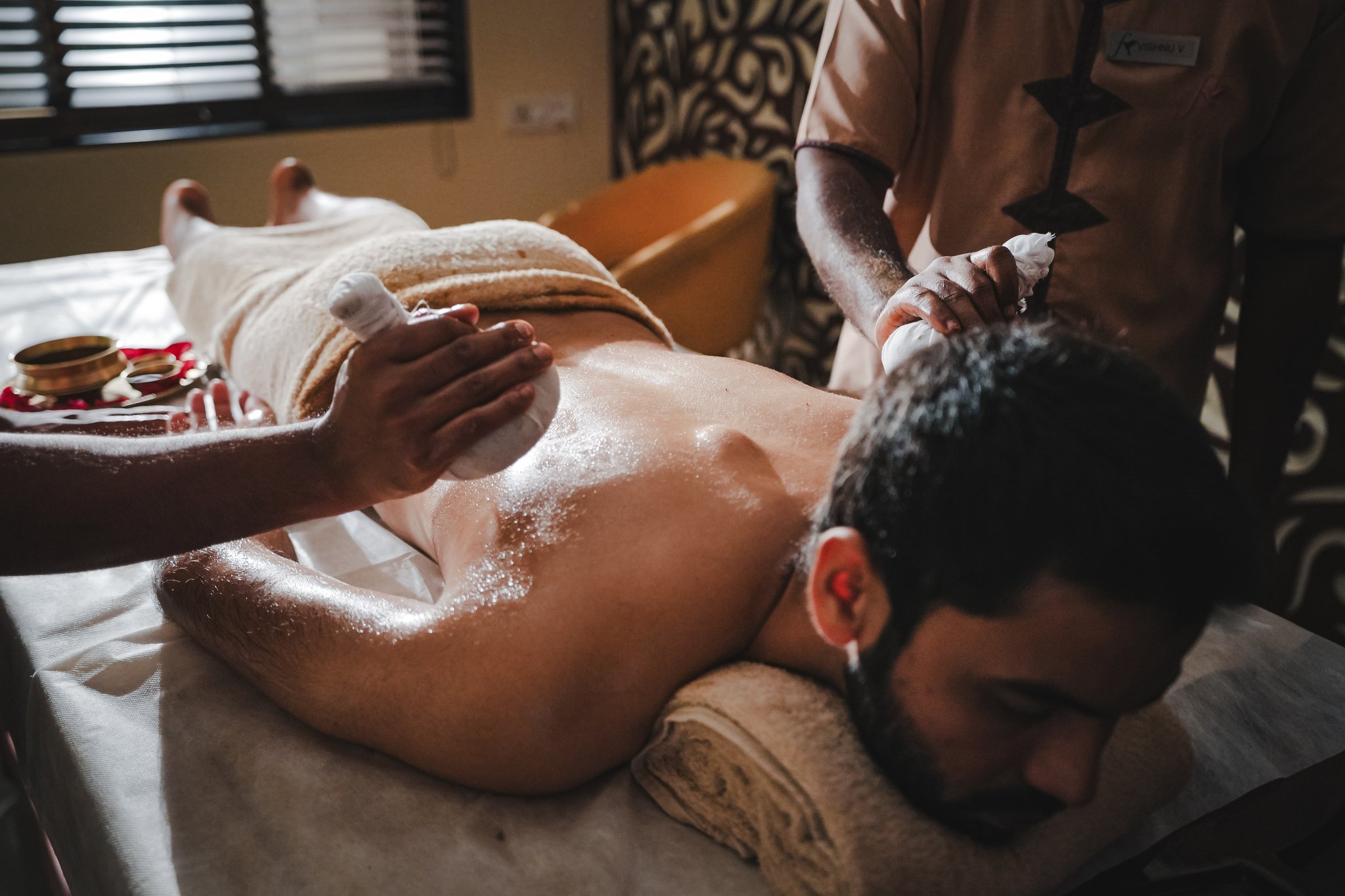
A therapy block may include:
- oil-based therapies for dryness and nervous system strain
- heat therapies for stiffness and heaviness, when appropriate
- head and sense therapies for sleep support and calm
- marma work for tension patterns
- supportive therapies chosen by your doctor
After therapies:
- rest is protected
This matters more than most people realise.
The body needs time to integrate.
A short rest period often makes the therapy more effective.
Lunch: the main meal
In Ayurveda, lunch is often the best time for the most complete meal.
The midday window tends to support digestion better than late night.
A typical lunch may include:
- cooked vegetables
- a protein that suits the person (often dals and lentils, sometimes other options based on plan)
- grains in appropriate amounts
- gentle spice and taste balance
- food that supports the programme goal
After lunch:
- gentle walking is often encouraged
- then quiet time
Afternoon: quiet, nature, and recovery
Afternoons are often a blend of:
- rest
- journaling
- reading
- nature time
- gentle movement
- optional supportive therapies if scheduled
This is where the nervous system starts to soften.
Many guests notice the real benefit here:
The body stops bracing.
When the body stops bracing, digestion, sleep, and mood begin to shift.
Evening: light meal and sleep runway
Dinner: simpler than lunch
Dinner is often:
- lighter
- simpler
- earlier when possible
This protects sleep.
Late heavy dinners are one of the fastest ways to disturb recovery.
Evening downshift
Evenings are kept calmer on purpose.
Helpful practices:
- low lighting
- reduced screens
- gentle breathing
- short walk
- quiet conversation, not intense content
This is the sleep runway.
Night: deeper rest
If the day has been calm and steady, sleep often improves naturally.
This can show up as:
- easier falling asleep
- fewer night wake-ups
- deeper rest
- clearer mornings
Not always instantly. Often steadily.
What makes this day powerful (the hidden ingredients)
The power is not only in the treatments.
The power is in the combination:
- rhythm
- nature
- simplicity
- reduced stimulation
- food that supports digestion
- rest that is real
That combination is what modern life rarely gives you.
That is why it works.
Try This: a “retreat day at home” mini version
If you want to practise the shape of this day at home, try this once a week:
Morning:
- warm water
- 10-minute walk outside
- simple breakfast
Midday:
- lunch as the main meal
- 10-minute walk after
Afternoon:
- 20 minutes of quiet time, no phone
Evening:
- lighter dinner
- screens down early
- 6 slow breaths before bed
You do not need a perfect week.
You need one day that reminds the body what rhythm feels like.