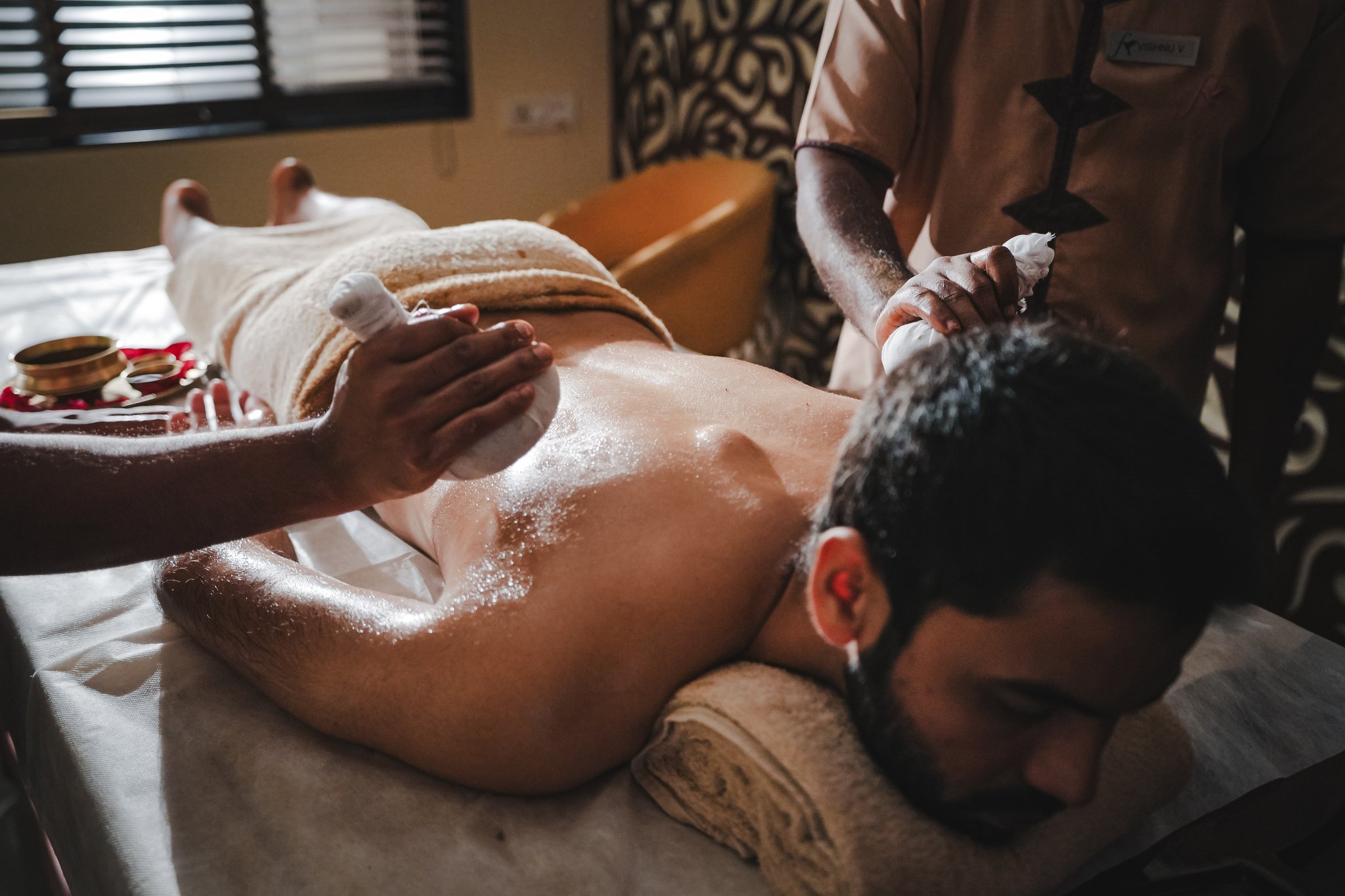
Part 7: The treatment atlas
If you’ve ever looked at an Ayurveda brochure and felt lost in a long list of therapies, you’re not alone.
The names can sound unfamiliar.
The menus can feel like a buffet.
And it’s not always obvious what any of it is for.
Ayurveda has a simpler truth underneath all the names:
External therapies are tools.
They’re chosen to support a pattern.
That pattern might be dryness and nervous system strain.
Or heat and irritation.
Or heaviness and stagnation.
The aim is not to “collect treatments”.
The aim is to choose the right support for the body you have today.
This chapter is your orientation.
It explains:
- what external Ayurvedic therapies actually are
- what they tend to support
- how they’re selected in real clinical practice
- who they suit, and when to pause
The next chapters will then go deeper into specific families like Swedana (heat), Shiro therapies (head and nervous system), Udvartana and lepa (powders and pastes), and therapies for the eyes, ears, and nose.
A gentle safety note
This chapter is educational, not medical treatment.
External therapies are usually gentle when done properly, and they still have boundaries. If you have a medical condition, are pregnant, breastfeeding, recovering from surgery, managing severe symptoms, or taking long-term medication, always speak to a qualified clinician first.
If you have fever, acute infection, severe pain, sudden symptoms, or anything urgent, seek medical care before any therapy.
What “external therapy” means in Ayurveda
In Ayurveda, many therapies are part of bahya chikitsa, external treatments.
They’re used to influence:
- the nervous system (settling, grounding, downshifting)
- circulation and warmth
- stiffness and tension patterns
- the movement of fluids and heaviness
- digestion support indirectly through calming and rhythm
- rest and sleep support
They often use simple levers:
- oil
- heat
- herbal pastes or powders
- gentle pressure and touch
- stillness and rest
You’ll notice something important:
External therapy is rarely meant to replace food, sleep, or rhythm.
It’s meant to support them.
What makes a therapy “Ayurvedic” rather than “spa”
A massage can be relaxing.
An Ayurvedic therapy is chosen for a reason, and it follows a logic.
A therapy becomes “Ayurvedic” when:
- it’s selected based on your constitution and current imbalance
- it uses oils, heat, pace, and technique aligned to that pattern
- it is part of a plan (food, routine, rest, movement, and sometimes herbs)
- it includes aftercare so the benefit settles
A simple example:
Two guests can receive oil therapy, and it won’t be the same experience.
One may need grounding and warmth.
Another may need cooling and gentleness.
Another may need lighter touch and less oil so heaviness does not increase.
That’s the difference.
The three big therapy levers
If you strip the names away, most classic external therapies use one or more of these levers.
1) Oil and lubrication (snehana)
Oil can be deeply soothing for the nervous system, and it can help dryness patterns.
Oil-based therapies are often used when the pattern includes:
- dryness
- tension and stiffness
- restlessness, anxiety, light sleep
- feeling ungrounded, scattered, “tired but wired”
Oil is not only about the skin.
In Ayurveda, oil is a way of bringing warmth, steadiness, and softness into the system.
2) Heat and sweating (swedana)
Heat therapies are often used to support:
- stiffness and tightness
- heaviness and sluggishness
- congestion patterns
- “stuck” feelings in the body
Heat is not used blindly.
Some people benefit from it greatly.
Some people with strong heat patterns need it used carefully, or not at all.
That’s why assessment matters.
3) Drying and stimulation (rukshana), including powders and friction
Powder therapies and certain rubbing techniques are used when the pattern includes:
- heaviness
- sluggish circulation
- dampness and stagnation
- “thick tiredness” and fog
They are not always comfortable in the spa sense.
They are often effective in the clinical sense, when chosen correctly.
Who tends to benefit from external therapies
Many people benefit, and the type of benefit depends on the pattern.
If you feel dry, restless, under-slept, or “tired but wired”
External oil therapies often help you feel:
- more grounded
- less tense
- less reactive
- more able to sleep deeply
This is common when Vata patterns are high.
If you feel hot, reactive, easily irritated, or “running too intense”
Gentler, cooling approaches and calming therapies often help you feel:
- less inflamed inside
- calmer in the mind
- less sharp and reactive
- better able to downshift in the evening
This is common when Pitta patterns are high.
If you feel heavy, foggy, sluggish, or stuck
Lighter therapies, movement-supportive approaches, and some heat or dry therapies often help you feel:
- more awake and clear
- lighter after meals
- more willing to move
- less congested and stagnant
This is common when Kapha patterns are high.
When to pause, delay, or ask for medical advice first
External therapies are not “always yes”.
You should pause if you have:
- fever or acute infection
- severe diarrhoea or vomiting
- acute inflammation that feels hot, swollen, and sharp
- fresh injuries or new severe pain
- open wounds, spreading rashes, or active skin infections
- severe dizziness or fainting episodes
- pregnancy or postpartum changes without clear clinician guidance
A responsible centre will ask these questions.
If they do not, that is a red flag.
What a session usually feels like
A well-run therapy should feel:
- safe
- respectful
- calm
- responsive to your comfort
A typical session may include:
- a brief check-in (sleep, appetite, current symptoms, energy)
- oil or therapy choice based on your current state
- clear communication about pressure and comfort
- warmth and quiet, not constant chatter
- rest time after the therapy so the body settles
If you feel rushed, pressured, or ignored, speak up.
Therapy is not meant to be endured.
It’s meant to support.
Aftercare matters more than most people realise
The therapy is not only the 60 minutes on the table.
The hours after matter too.
General aftercare that suits many people:
- rest quietly for a short period after therapy
- keep the body warm
- avoid cold drinks straight after oil and heat therapies
- eat simply if appetite is sensitive
- avoid intense exercise straight after a deeply calming treatment
- protect your evening so the nervous system can integrate
The aim is simple:
Let the benefit settle.
Do not shock the system right after it opens.
How a good plan is built: not “menu shopping”
This is the part that changes everything.
In Ayurveda, external therapies are usually chosen as part of a plan, not as random add-ons.
A good plan considers:
- your constitution (prakriti)
- your current imbalance (vikriti)
- digestion strength (agni)
- signs of build-up or strain (ama patterns)
- sleep quality and stress tone
- season and climate
Then it chooses:
- what to begin with
- what to avoid for now
- what to add later if the body responds well
That is why “three therapies a day for everyone” is not the point.
The point is the right therapy at the right time.
A quick guide to what’s coming next in the atlas
This book will cover the main families in clear sections:
- Swedana family: different forms of therapeutic heat
- Shiro therapies: head and nervous system calming
- Udvartana and lepa: powders, pastes, and stimulation therapies
- Netra, karna, nasya: therapies for eyes, ears, and nasal pathways
- Marma: vital points and safe use
- Ayurvedic physiotherapy principles: movement, recovery, function
You don’t need to remember the names right now.
You only need to understand the logic: Oil for dryness and nervous system strain. Cooling calm for heat and reactivity. Lightening and movement support for heaviness and stagnation.
Try This: how to prepare for a therapy day (simple and helpful)
Before your therapy:
- eat a lighter meal if you tend to feel heavy after treatment
- avoid arriving rushed if possible
- drink water, yet don’t overfill the stomach
- tell the therapist if you have sensitivity to pressure, heat, or oils
After your therapy:
- rest 10 to 20 minutes if you can
- keep warm
- choose a simple meal
- reduce evening stimulation so sleep benefits can land
This is not strict.
It’s just kind to your system.
Ask your Vaidya: questions that keep this personal and safe
- What is the main pattern you are treating in me right now: dryness, heat, heaviness, or a mix?
- Which therapy family suits that pattern best, and why?
- What should I avoid for now?
- What should I notice after a therapy as a sign it helped: sleep, appetite, mood, elimination, pain level?
- How often should I do this therapy, and for how long before we review?
If the answer feels vague, ask for one priority.
Good Ayurveda is clear.