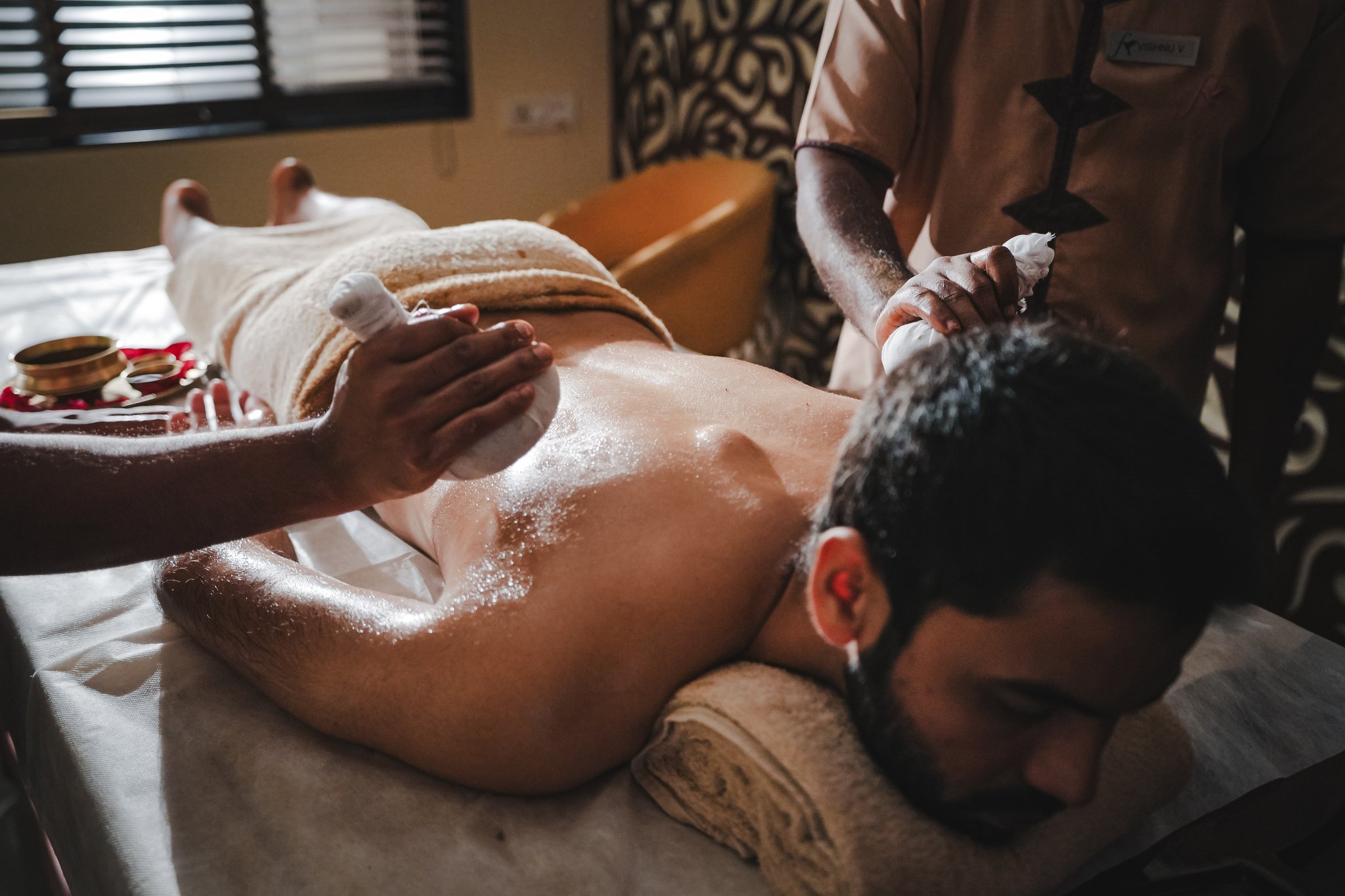
Part 7: The treatment atlas
Oil and heat therapies often feel soothing.
Powder and paste therapies feel different.
They are often more stimulating, more “waking”, and more directed at patterns like heaviness, sluggish circulation, dampness, and the sense that the body is carrying extra load.
In Ayurveda, this family of treatments sits under a simple principle:
When the pattern is heavy and sticky, you may need more dryness, friction, and movement support.
When the pattern is dry and sensitive, you usually need more oil, warmth, and gentleness.
This chapter explains two key therapy families:
- Udvartana: powder massage and friction therapies
- Lepa: herbal pastes and packs applied to the skin
They are different tools, and when chosen well they can support comfort, circulation, and clearer body feeling.
A gentle safety note
This chapter is educational. It does not prescribe medical treatment.
Powder and paste therapies should be delayed or carefully supervised if any of these are true:
- Fever, acute infection, acute illness
- Active skin infection, open wounds, spreading rash, or severe eczema flare
- Very dry, cracked skin that feels painful
- Severe inflammation that is hot, sharp, and swollen
- Severe allergy patterns, especially to plant powders or fragrances
- Pregnancy or postpartum changes without clear clinician guidance
- Bleeding disorders or medications that increase bruising risk
If you have asthma triggered by powders or scent, tell your practitioner before treatment.
What is Udvartana?
Udvartana is a dry or semi-dry massage using herbal powders.
It is usually performed with:
- upward strokes (against hair direction)
- brisk, rhythmic friction
- powders chosen for the person and the goal
It can be done as a full-body therapy or focused on specific areas.
In a retreat setting it is often used when the pattern includes:
- heaviness and sluggishness
- a sense of “dampness” or congestion
- low circulation sensation and slow movement drive
- sticky fatigue and fogginess after meals
- water retention tendencies
Udvartana is not about punishment or “scrubbing the body into submission”.
It is a controlled, purposeful stimulation.
What is Lepa?
Lepa is the application of herbal paste to the skin.
The paste is made with powders mixed into a base, often water, herbal decoction, or an oil base depending on what is being targeted.
A lepa may be applied:
- locally (for a joint, an area of skin, a specific region)
- or more broadly (packs, wraps, or partial applications)
Lepa is often used when the aim is more specific:
- calming local heat or irritation
- supporting skin comfort and clarity
- easing local aches and stiffness when appropriate
- supporting areas that feel swollen or strained
Udvartana is usually more stimulating.
Lepa can be either calming or stimulating, depending on what is in the paste and what the intention is.
The Ayurvedic logic behind powders and pastes
Ayurveda works through qualities.
Udvartana tends to bring in these qualities:
- drying
- lightening
- stimulating
- moving
This is why it is often chosen for Kapha-heavy patterns.
Lepa can bring in different qualities depending on the formula:
- cooling and calming
- warming and moving
- drying and clearing
- soothing and softening
This is why a consultation matters.
The same “paste” can be used for very different patterns.
Who tends to benefit from Udvartana
Udvartana is often considered when the dominant pattern is:
- Kapha heaviness
- sluggish digestion and sluggish circulation
- congestion and dampness tendencies
- “stuck” body feeling, especially in the morning
- low motivation with heavy fatigue
A simple way to describe the felt shift some people notice:
The body feels more awake.
The skin feels lighter.
The mind feels clearer.
Movement feels easier.
That is not a guarantee.
It is a common direction when the therapy is appropriate and the person responds well.
Who should be careful with Udvartana
Udvartana can be too drying or too stimulating when:
- Vata is high (dryness, anxiety, light sleep, sensitivity)
- skin is already dry, cracked, reactive
- someone bruises easily
- the nervous system is already over-stimulated
In these cases, a practitioner may:
- choose a gentler method
- use less friction
- use a paste-based version rather than fully dry powder
- prioritise oil therapies first to stabilise
A good centre does not force Udvartana because “it’s on the menu”.
They choose it when it fits the pattern.
Udvartana by dosha pattern (simple guide)
Vata-leaning patterns
Aim: protect dryness and avoid overstimulation.
- If Udvartana is used, it is often gentler, shorter, and sometimes combined with oil or followed by oil
- Many Vata-leaning people do better with oil therapies first, then gentle stimulation later if needed
Pitta-leaning patterns
Aim: avoid adding heat.
- Powders can irritate if the skin is already hot and reactive
- If used, powders and pastes are usually chosen to be calming and not too heating
- Sessions are often shorter and carefully monitored
Kapha-leaning patterns
Aim: support movement and lightness.
- Udvartana is often more comfortable and useful here
- Follow-up movement and lighter dinner often help the benefit land
What an Udvartana session usually feels like
A typical session may include:
- brief check-in (skin sensitivity, sleep, digestion, energy)
- application of powder, often with brisk strokes
- a sensation of friction and stimulation, sometimes warmth building in the body
- aftercare, often including showering, rest, and a simple meal
It can feel invigorating.
It can also feel intense if you are sensitive.
You should always be able to ask for:
- less pressure
- less friction
- shorter duration
- a pause
Aftercare matters more than people think
Powder therapies change skin and nervous system tone.
A good aftercare approach is simple:
- shower or rinse the powders off gently
- avoid cold exposure immediately afterwards
- hydrate steadily
- eat simply, especially if digestion is sensitive
- protect the evening so sleep stays steady
Some people feel very awake after Udvartana.
That is great during the day, and it can disturb sleep if you do it late or follow it with stimulation.
Timing matters.
Lepa: pastes and packs in more detail
Lepa is often used in these broad ways:
Cooling and calming lepa
Used when the area feels hot, irritated, inflamed, or reactive.
Often chosen for:
- heat patterns in the skin
- local irritation
- areas that feel “burning” or overactive
Warming and moving lepa
Used when the area feels stiff, cold, tight, or stuck.
Often chosen for:
- local stiffness
- aches that feel better with warmth
- areas that feel tight and contracted
Drying and clearing lepa
Used when there is dampness, heaviness, or swelling tendencies.
Often chosen for:
- congestion-type skin patterns
- puffiness or heaviness patterns in a local area
The key point:
Lepa is not “one thing”.
It is a delivery method.
The formula matters.
What a lepa session usually feels like
Most people experience:
- a sense of cooling or warmth depending on the paste
- a calm “holding” effect when the paste is left on
- gradual change in sensation rather than immediate drama
Lepa is often more specific and local than a full-body therapy.
It can also be used as supportive care alongside other therapies, based on what is appropriate.
Home-friendly options (gentle and safe)
This is not a replacement for clinical care. It’s a simple way to borrow the principle at home.
Udvartana-lite: dry brushing
- Use a soft dry brush
- Brush gently toward the heart
- Keep it short, 2 to 3 minutes
- Skip if skin is irritated or very dry
- Follow with a warm shower
This supports movement and circulation without harshness.
Lepa-lite: simple “ubtan” style paste for skin comfort
- Gram flour (besan) with water or rose water for a gentle paste
- Apply lightly, leave briefly, rinse gently
- Patch test first
- Skip if skin is reactive or broken
If you have acne-prone or sensitive skin, treat this with caution and ask your practitioner what suits you.
Ask your Vaidya: questions that keep this safe and personal
- Why are you choosing Udvartana or Lepa for me right now?
- What pattern are we addressing: heaviness, dryness, heat, stiffness, congestion?
- Will this be a dry powder approach or a paste-based approach, and why?
- How should it feel during the session, and what signs mean we should reduce intensity?
- What aftercare should I follow today to protect digestion and sleep?
- How often should this be done, and what outcome are we measuring?
Clear questions create safer care.
How Fazlani Nature’s Nest uses powders and pastes
In a well-run retreat, these therapies are not “extras”.
They are selected because they suit the person’s current state, season, digestion, and nervous system tone.
Powder and paste work is at its best when paired with:
- food that suits the pattern
- a rhythm that protects sleep
- movement that supports flow
- calm aftercare
That is how the benefit becomes real, not just a session.