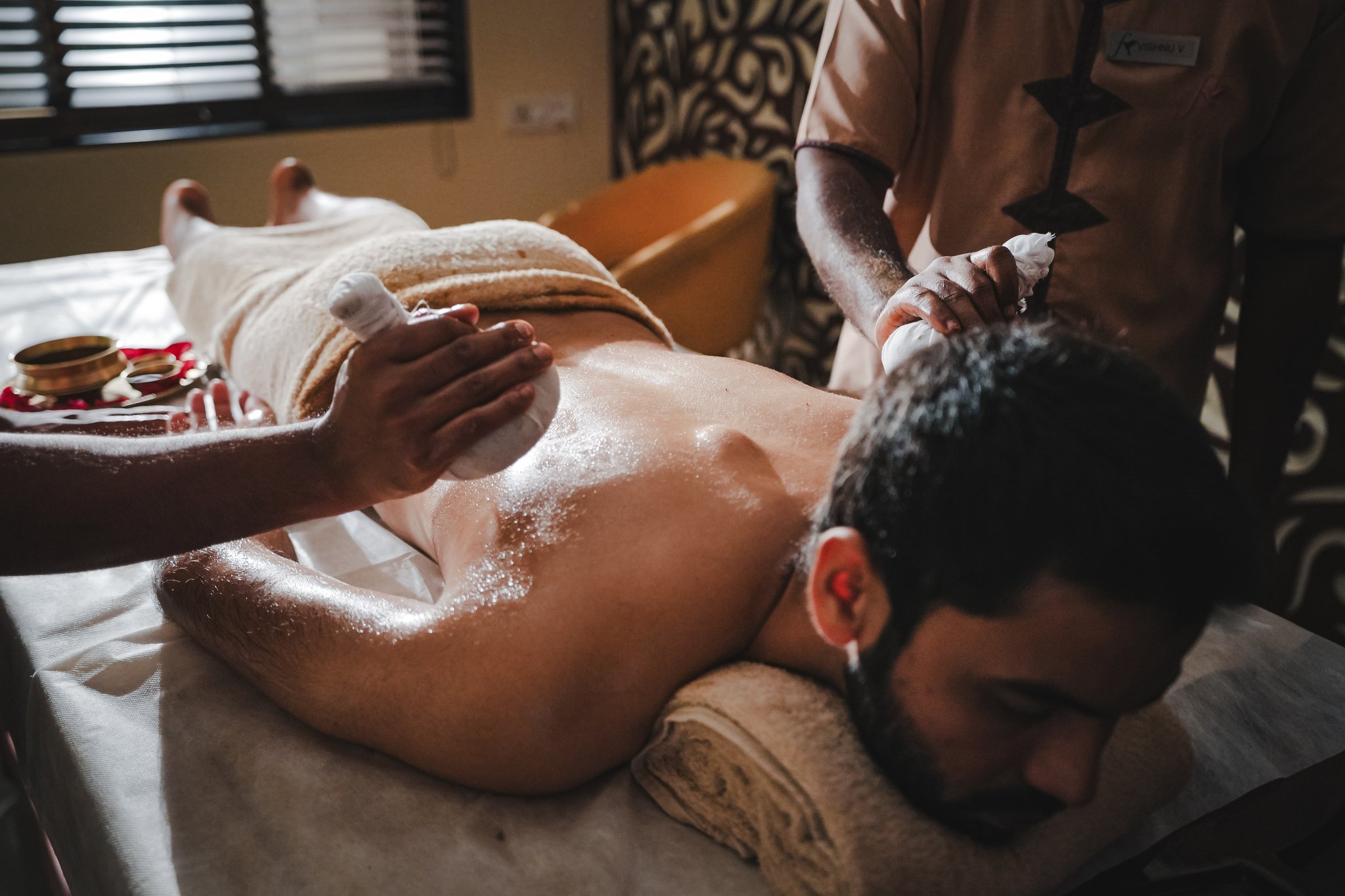
Part 8: Panchakarma in depth
The word Panchakarma literally points to “five actions”.
These are the classical cleansing actions described in Ayurveda:
- Vamana
- Virechana
- Basti
- Nasya
- Raktamokshana
People hear that list and assume the goal is to do all five.
That is not how responsible Panchakarma works.
A well-run programme chooses what suits the person, at the right time, at the right pace, with proper monitoring.
This chapter explains what each action is, what it is generally used for in classical logic, what it may feel like, and the safety boundaries that matter.
A gentle safety note
This chapter is educational. It does not diagnose you, and it does not teach you to do any procedure yourself.
These actions must be clinician-led, especially if you:
- have any medical condition
- take medication
- are pregnant or breastfeeding
- have had recent surgery
- have a history of fainting, unstable blood pressure, seizures, bleeding disorders, or severe anxiety
If you have severe symptoms or anything urgent, seek medical care first.
Why these five actions exist at all
The simplest classical idea is this:
Sometimes a system needs stabilising.
Sometimes a system also needs clearing.
Shamana is stabilising.
Shodhana is clearing.
The five actions are part of shodhana.
They are not “stronger wellness”. They are clinical tools used when the practitioner believes the body is ready, the environment is right, and the aftercare can be protected.
Before we go action by action: the hidden truth
The main action is never the whole programme.
The programme includes:
- preparation (so the body is not shocked)
- the main action (selected and supervised)
- post-care (so results hold)
If someone offers a “five actions” experience without preparation and aftercare, that is not classical Panchakarma. It is marketing.
1) Vamana: therapeutic emesis, explained respectfully
Vamana is a supervised therapeutic process that involves controlled emesis in suitable cases.
It is traditionally associated with Kapha-heavy patterns.
What it is generally used for (classical lens)
A practitioner may consider Vamana when the pattern includes strong Kapha qualities such as:
- heaviness and sluggishness that feels deeply “loaded”
- thick congestion and mucus dominance
- appetite that feels dull with heaviness
- recurring patterns that feel linked to upper-body heaviness
The doctor’s job is to decide if this is truly appropriate, and whether the person has the strength and stability for it.
What it can feel like (human reality)
People often report:
- a strong need for rest afterwards
- sensitivity and quietness in the system
- shifts in appetite and sleep
- emotional waves, mainly because stimulation drops and the nervous system is more open
The experience should never be forced. It should be supervised, paced, and monitored.
When Vamana is usually avoided or delayed
A responsible clinician will be cautious if there is:
- pregnancy or breastfeeding
- significant weakness or low body weight
- severe anxiety, panic, or nervous system fragility
- uncontrolled blood pressure or fainting tendency
- acute illness, fever, infection
- significant medical risks without clearance
2) Virechana: therapeutic purgation, explained with care
Virechana is a supervised therapeutic process aimed at clearing excess Pitta patterns in suitable cases.
It is often described as a Pitta-directed cleansing action.
What it is generally used for (classical lens)
A practitioner may consider Virechana when the pattern includes strong Pitta qualities such as:
- heat and irritability that feels systemic
- acidity and burning digestion patterns
- inflammatory tendencies that recur
- skin flare-ups that are linked to digestion and heat patterns
- sleep that is restless with heat, vivid dreams, night warmth
This is not about “punishing the gut”. It is about reducing a load that is believed to be aggravating the system.
What it can feel like (human reality)
People often report:
- tiredness and the desire for quiet
- changes in heat sensation and appetite
- a calmer feeling afterwards when the programme is appropriate
- sensitivity to heavy foods during the rebuilding phase
When Virechana is usually avoided or delayed
A responsible clinician will be cautious if there is:
- dehydration risk or very low reserves
- severe digestive disease or acute flare without proper medical assessment
- pregnancy or breastfeeding
- unstable blood pressure or fainting tendencies
- active infection, fever, acute illness
- significant anxiety or mental instability without support
3) Basti: the central therapy in many Panchakarma plans
Basti refers to therapeutic enema procedures used in Ayurveda under supervision.
In classical Ayurveda, Basti is often described as a key action for Vata patterns.
That can sound surprising to modern readers, and the reason is simple:
Vata governs movement, nervous system signalling, elimination, dryness, and irregularity.
When Vata is disturbed, many systems wobble.
So Basti is used to support regulation, not just elimination.
What it is generally used for (classical lens)
A practitioner may consider Basti when the pattern includes Vata qualities such as:
- dryness and stiffness
- irregular digestion and irregular elimination
- pain patterns that worsen with stress, cold, travel, poor sleep
- nervous system fatigue and depletion
- the “tired but wired” pattern when the body cannot downshift
There are different types of Basti in classical systems, and the doctor chooses what suits the person.
What it can feel like (human reality)
When chosen well and supervised properly, people often report:
- a steadier sense of grounding
- improved comfort in digestion and elimination patterns
- improved sleep depth for some people
- less “buzz” in the nervous system
- shifts in stiffness and mobility over time
Basti is not meant to feel traumatic. It should feel controlled, respectful, and monitored.
When Basti is usually avoided or delayed
A responsible clinician will be cautious if there is:
- acute diarrhoea, vomiting, fever, infection
- severe weakness or dehydration
- pregnancy without specialist oversight
- acute abdominal pain without assessment
- serious medical conditions that require integrative planning
4) Nasya: nasal therapy as a Panchakarma action
Nasya is a supervised nasal therapy where an appropriate preparation is administered through the nostrils, based on suitability and timing.
Nasya is often considered in head-and-neck patterns, and it sits within a broader logic of supporting upper pathways and sensory load.
What it is generally used for (classical lens)
A practitioner may consider Nasya when the pattern includes:
- congestion or heaviness in the head region in suitable cases
- dryness in nasal passages with sensitivity
- head tension patterns that relate to sleep and sensory fatigue
- certain Vata-Kapha patterns in the upper channels
Nasya is not “a home hack”. Timing and aftercare matter.
What it can feel like (human reality)
People often report:
- clearing sensations
- watery eyes or mild discharge as the body responds
- a calmer head feeling afterwards for some people
- a need for quiet and warmth after the session
When Nasya is usually avoided or delayed
A responsible clinician will be cautious if there is:
- acute fever or active infection
- frequent nosebleeds
- severe sinus pain with strong symptoms that need medical assessment
- pregnancy without clear supervision
- severe weakness or nausea
5) Raktamokshana: bloodletting, and why it is treated with strict boundaries
Raktamokshana is described in classical Ayurveda as a blood-related clearing action.
It is also the action that requires the most caution in modern settings, because it intersects with medical risk, hygiene standards, and clinical scope.
A mature approach is simple:
This is not a casual retreat feature.
It is a specialised clinical procedure, used only in specific cases, under strict supervision, with full safety protocols.
What it is generally used for (classical lens)
Traditionally it is associated with strong Pitta-Rakta patterns, and it may be mentioned in contexts linked to:
- specific inflammatory patterns
- specific localised conditions where classical texts describe it as relevant
For most guests, education and caution are the right level here.
When it is usually avoided
In many modern retreat settings, it is avoided entirely, or reserved only for highly appropriate cases with proper medical governance.
It should always be avoided or treated with extreme caution if there is:
- anaemia or low haemoglobin risk
- blood thinners or bleeding disorders
- pregnancy
- fainting tendencies
- infection risk
- unclear medical history
Why the “right action” is not always the “strongest action”
Ayurveda is not trying to prove intensity.
The aim is:
- reduce the load that is driving imbalance
- protect digestion
- protect the nervous system
- rebuild stability afterwards
For some people, the most powerful Panchakarma programme is gentle, not dramatic.
For others, deeper actions are appropriate, with careful supervision.
The point is suitability, not bravery.
What you should expect from a safe programme
A safe Panchakarma programme does not only list actions.
It includes:
- screening and contraindications
- consultation-led selection of actions
- daily check-ins and monitoring
- a clear rest schedule
- a clear food plan
- a clear post-care plan
If those are missing, ask why.
Questions to ask your Vaidya before any action is chosen
These questions keep things safe and personal:
- Which action are you considering for me, and what pattern are we addressing?
- What makes you confident I’m suitable right now?
- What are the risks in my case?
- What would count as a warning sign for me during the programme?
- How will you monitor daily changes in sleep, appetite, elimination, heat, and mood?
- What does post-care look like for me, and how long does it last?
- What would be unsafe for me to do during and after the programme?
A good clinician welcomes these questions.