Part 10: Ayurveda for modern goals
Pain is not one thing.
One person has pain that feels hot, sharp, and inflamed.
Another has pain that feels dry, tight, and stiff.
Another has pain that feels heavy, dull, and stuck.
Ayurveda doesn’t treat pain as a single label. It treats pain as a pattern.
That pattern usually involves one or more of these:
- dryness and irregularity (often Vata)
- heat and inflammation (often Pitta)
- heaviness and stagnation (often Kapha)
- nervous system overload (which intensifies all pain)
This chapter is a calm, practical guide to pain support through an Ayurvedic lens, without making medical claims, and without replacing proper clinical care.
A gentle safety note
This chapter is educational. It does not diagnose you.
Seek medical care urgently if you have:
- sudden severe pain, especially chest pain, severe abdominal pain, or severe headache with new features
- new weakness, numbness, loss of balance, or bowel or bladder changes
- fever with pain, or signs of infection
- swelling, redness, and heat in a joint that is severe or sudden
- pain after injury, fall, or accident
- unexplained weight loss with pain
- pain that wakes you every night and worsens steadily
If you are under medical care, on blood thinners, or taking medication, keep herbal and cleansing approaches clinician-led.
Ayurveda can support comfort alongside proper medical assessment. It should not delay diagnosis when needed.
How Ayurveda understands pain
Ayurveda often reads pain through three questions:
- What quality does the pain have?
Dry? Hot? Heavy? Sharp? Moving? Stuck? - What makes it worse?
Cold? Heat? Stress? Late nights? Certain foods? Stillness? Movement? - What makes it better?
Warmth? Rest? Gentle movement? Cooling? Simplicity?
These questions matter because pain support changes depending on the pattern.
A hot inflammatory pain is not supported the same way as a dry stiff pain.
The three common pain patterns
Most pain experiences fall into one of these patterns or a blend.
1) Vata pain pattern (dryness, stiffness, “cracking”, sensitivity)
Often feels like:
- dry, tight, stiff pain
- pain that moves around
- joints that crack or feel creaky
- pain that worsens with cold, wind, travel, poor sleep
- pain that flares with stress
- restless sleep and nervous system tension alongside pain
Common drivers:
- dryness and poor hydration
- irregular meal timing and weak recovery
- long sitting, poor posture
- overtraining without rest
- stress and sleep debt
Support direction:
- warmth
- regular rhythm
- gentle oil support and soothing therapies when appropriate
- simpler meals that support agni
- gentle daily movement, not intense strain
- calm evenings and protected sleep
Vata pain often improves when the body feels warmer, steadier, and more grounded.
2) Pitta pain pattern (heat, inflammation, burning, sharpness)
Often feels like:
- hot, burning, sharp pain
- redness, inflammation tendencies
- pain that worsens with heat, spicy foods, alcohol
- irritation, intensity, frustration alongside pain
- sleep that is restless with heat, vivid dreams
Common drivers:
- heat load in the system
- intense work and intensity without downshift
- spicy late dinners
- alcohol and caffeine pushing heat
- inflammation patterns fed by stress
Support direction:
- cooling simplicity
- softer pace
- reduced spice and alcohol
- calming breath and less late-night intensity
- cooling therapies when appropriate
- restful recovery and sleep protection
Pitta pain often improves when heat is reduced and the nervous system softens.
3) Kapha pain pattern (heaviness, dull ache, stagnation)
Often feels like:
- dull, heavy ache
- stiffness that improves once you move
- congestion, puffiness, water retention tendencies
- pain that worsens with inactivity
- foggy mood or low motivation alongside pain
Common drivers:
- low movement
- heavy meals late at night
- weight gain patterns
- damp and cold exposure without warming movement
- sluggish digestion
Support direction:
- gentle activation
- walking and consistent movement
- lighter dinners
- heat therapies in suitable cases
- stimulating therapies like powders in suitable cases
- reducing heaviness in diet and routine
Kapha pain often improves when flow returns.
The role of the nervous system in pain
Pain is not only tissue.
Pain is also perception.
When the nervous system is overloaded:
- pain feels louder
- recovery feels slower
- sleep gets lighter
- muscles hold more tension
- inflammation markers can rise
This is why calm evenings and sleep support are pain medicine.
If you ignore sleep and try to “fix pain” with only therapies, results often wobble.
The four most useful pain supports in Ayurveda (practical)
These are the foundations that help most pain patterns when applied correctly.
1) Rhythm
Consistent meal times and consistent sleep window reduce system chaos.
Chaos increases pain sensitivity.
2) Movement
Gentle daily movement keeps joints lubricated and circulation active.
Pain often worsens when you stop moving completely.
The key is choosing movement that is safe and repeatable.
3) Warmth or cooling, depending on the pattern
- Dry stiff pain often benefits from warmth
- Hot inflamed pain often benefits from cooling and reduced heat triggers
- Heavy dull pain often benefits from warmth plus movement
Choose the direction that fits your pain quality.
4) Simpler food
When digestion is strained, inflammation patterns often rise.
A simpler meal rhythm and a lighter dinner can reduce pain indirectly by reducing load.
Try This: the 7-day pain support reset
This is not a medical treatment. It is a gentle lifestyle support experiment.
For 7 days:
- Dinner lighter than lunch
- Screens down 45 minutes before bed
- 6 slow breaths before sleep
- 10-minute walk after one meal daily
- 8 minutes of gentle mobility daily (ankles, knees, hips, shoulders, spine)
- Warmth or cooling based on your pain pattern
- warmth for dry stiff pain
- cooling simplicity for hot inflamed pain
- warmth plus movement for heavy dull pain
Track:
- morning stiffness
- pain intensity
- sleep depth
- mood steadiness
Often pain improves when sleep improves.
Therapies for pain support (chosen wisely)
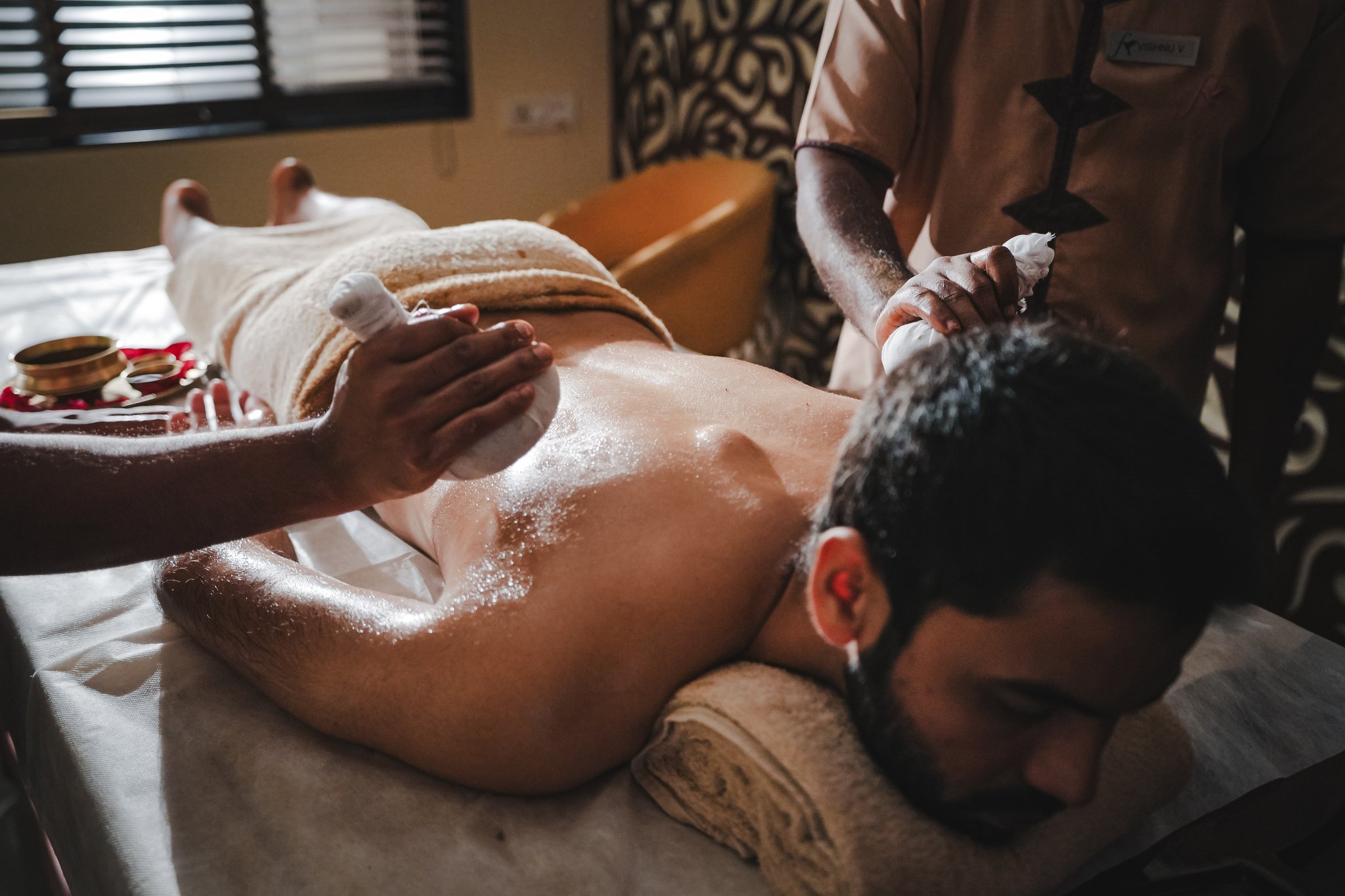
Ayurvedic therapies can support pain patterns, and they must be personalised.
Examples of therapy directions:
- oil therapies for dryness and nervous system strain
- heat therapies for stiffness and heaviness in suitable cases
- powders and stimulation therapies for heaviness and stagnation in suitable cases
- marma work for protective tension patterns
- shiro therapies when pain is linked to stress and sleep disruption
The right therapy depends on:
- your current state
- your digestion and sleep
- the season
- your sensitivity level
A good programme chooses therapies as part of a plan, not as a menu.
When pain needs medical assessment, not only Ayurveda
Please seek proper assessment if:
- pain is severe, sudden, or worsening
- there is weakness, numbness, or bladder and bowel changes
- there is fever with pain
- a joint is red, hot, and swollen suddenly
- pain follows injury or trauma
- pain wakes you nightly and intensifies steadily
Ayurveda supports recovery, and diagnosis and safety come first.
Ask your Vaidya: questions that make pain support personal
- Does my pain pattern look more dry and stiff, hot and inflamed, or heavy and stagnant?
- What is the first priority: sleep, digestion rhythm, movement, or therapies?
- Which therapies suit my pattern, and which should I avoid for now?
- What should I do daily at home that will support the therapy work?
- What signs tell us the plan is working: sleep, stiffness, mobility, mood, energy?
How Fazlani Nature’s Nest supports pain management
A retreat supports pain when it supports the whole pattern:
- consultation-led care
- food timed to reduce load and inflammation triggers
- calmer evenings and better sleep runway
- therapies chosen to match the person
- gentle movement that supports function
- nature time that reduces nervous system tension
Pain often becomes easier when the system is less stressed.
That is not a promise of cure.
It is a realistic pathway to support.