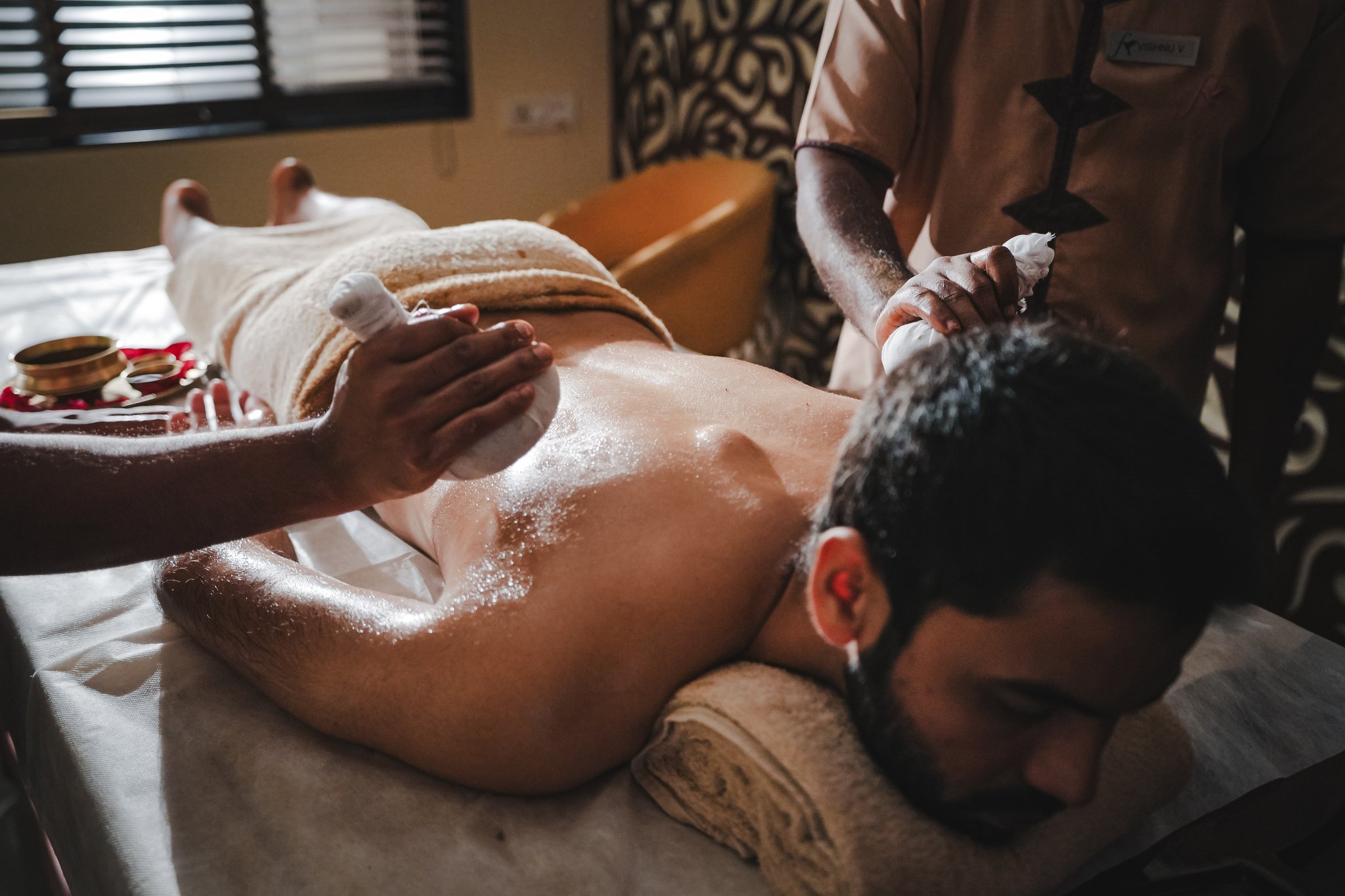
Part 7: The treatment atlas
If there’s one place modern life hits hardest, it’s the senses.
Eyes strained by screens.
Ears tired by constant noise.
Nasal passages dry from air conditioning, travel, pollution, and lack of rest.
Ayurveda treats the head and sense organs with real respect, because the senses feed the nervous system all day long. When the senses are overloaded, sleep gets lighter, digestion gets fussier, and the mind gets noisier.
This chapter covers three traditional therapy families that support the head and senses:
- Netra: eye therapies
- Karna: ear therapies
- Nasya: nasal therapies
These are not casual add-ons. They are chosen carefully, based on your constitution, your current state, and safety factors.
A gentle safety note
This chapter is educational. It does not prescribe treatment.
Head and sense therapies should always be clinician-led if you have any medical condition, take medication, have strong symptoms, or have a history of sensitivity.
Please pause and seek medical care first if you have:
- Severe eye pain, sudden vision change, flashing lights, severe redness, discharge, or eye injury
- Ear pain, discharge, sudden hearing loss, severe dizziness, or ringing that is new and intense
- Severe sinus pain, fever, nosebleeds that are frequent, or any urgent symptoms
In Ayurveda, “gentle and suitable” is the standard. If a therapy feels wrong for your system, it should be adjusted or stopped.
Why Ayurveda works with the senses
Ayurveda does not separate the senses from wellbeing.
Senses influence:
- Nervous system tone (calm vs overstimulated)
- Sleep depth and the ability to downshift
- Head tension, jaw tension, neck tension
- Focus and mental clarity
- Mood steadiness
So sense therapies are often used to support patterns like:
- Light sleep and overthinking (often Vata leaning)
- Head heat, irritation, intensity (often Pitta leaning)
- Congestion, heaviness, sinus fog (often Kapha leaning)
The aim is never “more therapy”. The aim is the right support for the pattern you are living right now.
Netra: eye therapies (what they are, what they support)
Netra therapies focus on comfort and support of the eye region and the head.
In classical Ayurveda, eyes are influenced strongly by Pitta qualities (heat, sharpness, intensity), and modern life adds dryness and sensory overload too.
Common Netra therapies you may encounter
Netra Tarpana
A practitioner creates a boundary around the eye area and retains medicated ghee or another suitable medium for a period of time.
This is not a DIY practice. It requires correct setup, hygiene, temperature control, and careful selection.
Often chosen to support:
- Screen strain and dry, tired eyes in suitable people
- Sensitivity that improves with nourishment and calm
- Head and eye fatigue patterns, when appropriate
Not suitable when:
- Active infection, discharge, severe redness, injury, or acute eye pain is present
- There are serious eye conditions that require ophthalmology oversight
- The person is currently very heat-reactive and the practitioner feels this method is not appropriate
Aschyotana
Eye drops or liquid application under supervision, selected and administered clinically.
Often chosen for:
- Local eye comfort and soothing support
- Sensitivity patterns when the practitioner decides it is suitable
Not a home practice unless prescribed by a clinician.
Gentle eye compress or soothing support
In some settings, simple supportive methods are used to calm strain and dryness, often alongside rest, reduced screen load, and sleep support.
What Netra therapies often feel like
- Cooling or soothing sensation, depending on method
- A sense of relief in the forehead and temples
- A strong “downshift” effect for some people
You may feel sleepy afterwards. That can be normal, and it should be monitored.
Karna: ear therapies (what they are, what they support)
Karna therapies work with the ears and surrounding head region.
Ayurveda treats ears as closely linked to Vata qualities, especially dryness, sensitivity, and nervous system strain.
Common Karna therapies you may encounter
Karna Purana
Warm medicated oil is placed into the ear canal under supervision for a short period, then released.
This is not a home practice unless a clinician has guided you clearly, because ear conditions vary, and safety matters.
Often chosen to support:
- Dryness and sensitivity patterns
- Certain forms of ear discomfort that are not acute infection
- Nervous system settling in Vata-heavy phases, when appropriate
Not suitable when:
- Ear infection, discharge, acute pain, perforated eardrum, or sudden hearing loss is suspected
- The person has severe dizziness or vertigo without assessment
- There is any unclear acute ear condition
Gentle head and jaw support around the ear region
Often used to reduce tension in the jaw, neck, and temples that can feed ear discomfort and head fatigue.
What Karna therapies often feel like
- Warmth and softness around the ear region
- A calming, grounding effect for some people
- Sometimes a sense of the nervous system “letting go”
Nasya: nasal therapies (what they are, what they support)
Nasya refers to nasal therapy, where a clinician administers an appropriate oil or herbal preparation through the nostrils under supervision.
In Ayurveda, the nasal route is considered closely connected with head pathways, senses, and nervous system tone.
Nasya is not “just putting oil in the nose”. It is timing, dose, method, and aftercare.
Common Nasya styles you may encounter
Pratimarsha Nasya (gentle daily dose)
A very small dose approach used in some traditions, often as a gentle support practice under guidance.
Shodhana Nasya (clearing style)
A more clearing approach, used only when appropriate and supervised.
Often chosen to support
- Dryness in nasal passages in suitable people
- Congestion patterns, sinus heaviness, “head fog” in suitable people
- Head tension patterns that relate to the upper pathways
- Nervous system settling for some Vata patterns
Not suitable when
- Acute fever, active infection, severe sinus pain, or severe congestion with intense symptoms is present
- There are frequent nosebleeds
- The person is very nauseous, very weak, or strongly depleted
- There are medical conditions where nasal intervention needs medical oversight
A responsible practitioner will always decide timing and suitability.
What Nasya often feels like
- A strong sense of clearing, or a strong sense of calm, depending on method
- A shift in head pressure or head clarity
- Sometimes watery eyes or mild discharge as part of the body responding
Aftercare matters a lot with Nasya.
The most important part of these therapies: aftercare
Sense therapies open the system. The hours after help the benefit land.
A simple aftercare approach often includes:
- Rest quietly for 10 to 20 minutes if possible
- Avoid cold wind, cold water on the head, and harsh air conditioning immediately after
- Avoid heavy meals straight after if digestion is sensitive
- Keep stimulation low for a while (screens and intense work)
- Protect the evening so sleep can deepen
These therapies often work best when the rest of the day supports them.
Home-friendly support that is generally safe
This is not a replacement for clinical therapies. It’s a way to support the same intention gently.
For eyes (Netra support)
- Use the 20-20-20 rule on screen days
- Blink on purpose when you notice staring
- Get daylight exposure early in the day
- Reduce screen brightness at night
- Use warm or cool compress depending on what feels soothing, and stop if it worsens symptoms
If you have pain, discharge, or sudden vision changes, get medical care.
For ears (Karna support)
- Avoid cotton buds in the ear canal
- Reduce jaw tension and clenching (especially at night)
- Warmth around the neck and jaw can help some people
- If you have pain, discharge, or sudden hearing change, get medical care
For nose (Nasya-style intention, without doing Nasya)
- Gentle steam inhalation can feel supportive for some people
- Hydration and warm meals often reduce dryness and congestion patterns
- Avoid extreme nasal practices unless a clinician advises them
If symptoms are severe or persistent, seek medical care.
Ask your Vaidya: questions that keep head and sense therapies safe
- Why are you recommending an eye, ear, or nasal therapy for me right now?
- What pattern are we addressing: dryness, heat, heaviness, congestion, overstimulation?
- What are the contraindications in my case?
- What should I expect during and after the session?
- What aftercare do you want me to follow today?
- How will we measure if it helped: sleep, head clarity, eye comfort, sinus comfort, nervous system calm?
If the answers are unclear, ask for one priority and one clear boundary.
How Fazlani Nature’s Nest should approach these therapies
In a well-run retreat, sense therapies are not offered as a fixed menu item.
They are chosen because they match:
- your constitution and current state
- your digestion and sleep stability
- the season and climate
- your sensitivity level
They work best alongside:
- steadier meal timing
- calmer evenings
- time in nature
- reduced stimulation
- proper rest after treatments
That is how a “small” therapy becomes a meaningful shift.