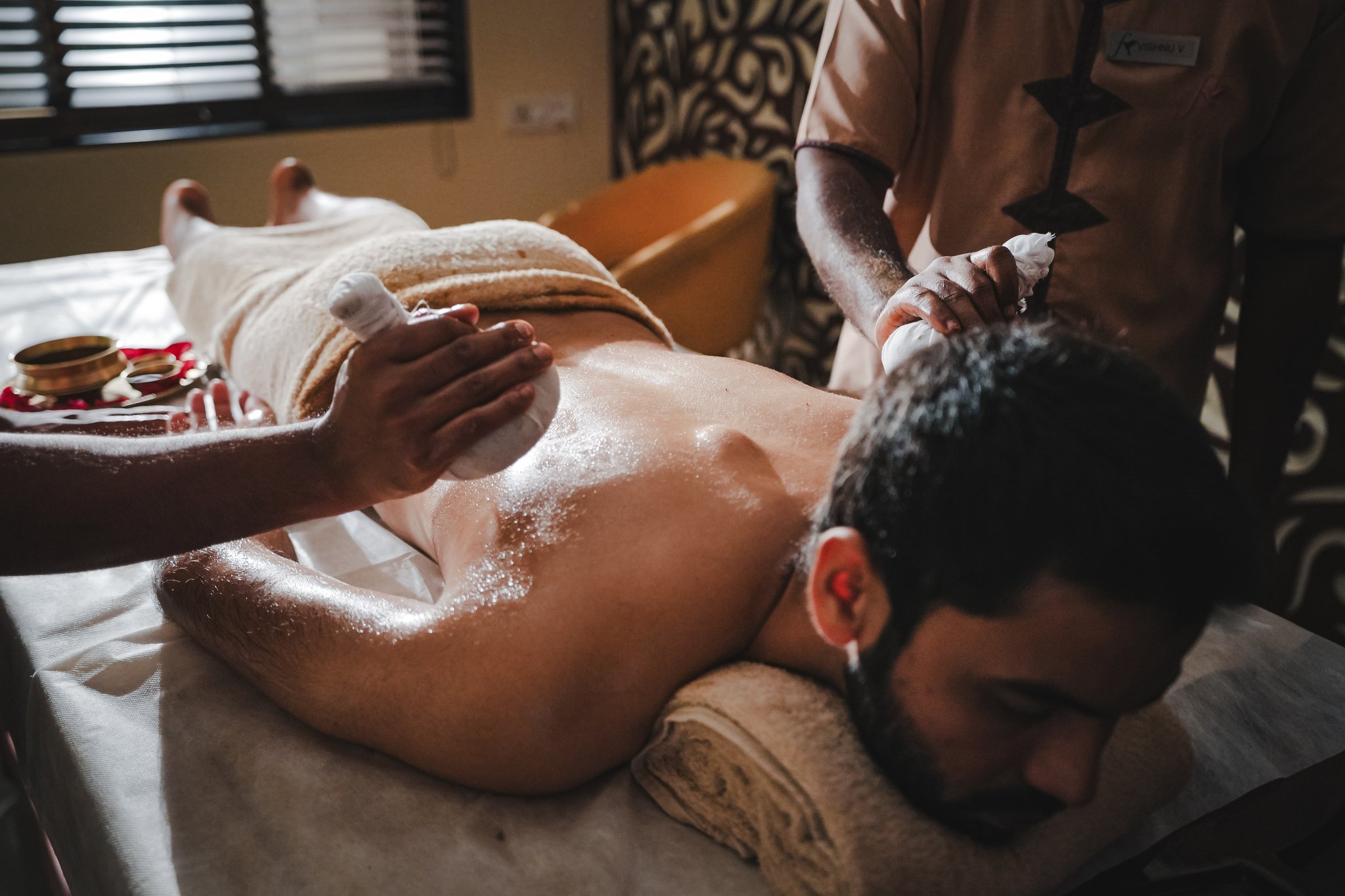
Part 7: The treatment atlas
Some Ayurvedic therapies work through oil.
Some work through heat.
Some work through the senses.
Marma work is different.
It works through precision, gentleness, and the nervous system.
In Ayurveda, marma refers to vital points where many structures meet: muscles, tendons, nerves, bones, joints, blood vessels, and subtle pathways. These points matter because they act like “junction boxes” in the body.
When a marma point is tense, blocked, irritated, or sensitive, it can influence how the body feels and moves. When it is supported skillfully, the body often downshifts and reorganises.
This chapter explains:
- what marma points are
- what marma therapy is (and what it is not)
- how to keep it safe
- what to expect in a retreat setting
- simple, gentle ways to support your own body without trying to “do marma therapy” at home
A gentle safety note
Marma work should be gentle, skilled, and consent-led.
Please pause and seek medical care first if you have:
- severe or sudden pain
- new numbness, weakness, or neurological symptoms
- fever, acute infection, severe inflammation
- recent injury, fracture, or post-surgery healing
- blood clot risk, uncontrolled blood pressure issues, fainting episodes
- severe mental health distress that needs clinical support
If you are pregnant, postpartum, on blood thinners, or have a condition that increases bruising risk, marma work must be adapted and clinician-led.
This chapter is educational. It does not teach you to perform clinical marma therapy.
What marma actually means
The word “marma” is often translated as “vital point”.
The important idea is not the translation. The important idea is the function:
A marma point is a place where many systems meet.
That meeting place can become:
- tight and over-protected (common in stress and overwork)
- sensitive and reactive (common in Vata and Pitta strain)
- stuck and dull (common in Kapha heaviness and low movement)
- painful because movement or posture has been strained for too long
Ayurveda treats these points with respect because they influence:
- movement and mobility
- pain patterns and stiffness
- breath rhythm
- sleep and downshift
- head and sensory fatigue
- overall nervous system tone
Marma work is not about force.
It is about helping the body feel safe enough to let go.
What marma therapy is (and what it is not)
Marma therapy is not a deep tissue punishment session.
It is not a quick “fix” where someone presses a point and your life changes.
Marma therapy is usually:
- gentle touch or sustained pressure
- carefully chosen points, not random pressing
- often paired with oil, warmth, or breath
- done in a calm environment with time to rest after
The practitioner is watching:
- your breath
- your response to touch
- tension patterns and asymmetry
- whether pressure calms or irritates
- how your nervous system behaves in stillness
If pressure hurts sharply, makes you dizzy, makes you anxious, or spikes pain, the approach is wrong for your system in that moment.
Why marma matters in modern life
Most modern stress shows up in a few predictable places:
- jaw and temples
- neck and upper shoulders
- chest and diaphragm area
- lower back and hips
- hands, wrists, forearms (keyboard life)
- feet and calves (poor circulation, long sitting)
These are not “weak points”. They are common holding zones.
Marma work can be helpful because it speaks to the body in a language the body understands:
safe touch, clear pressure, calm attention, rhythm.
Sometimes the nervous system relaxes faster through touch than through thinking.
The four marma groups (simple overview)
Classical Ayurveda categorises marma points in different ways. One simple way to understand them is by the main tissue focus.
1) Muscle-based points
Often related to tension, tightness, protection patterns.
2) Tendon and ligament-based points
Often related to joint stability and stiffness.
3) Vessel and blood-related points
Handled gently, with extra care.
4) Bone and joint-related points
Often linked with deeper structural patterns.
You do not need to memorise categories. This is here to show that marma is not vague. It is a structured map.
What marma work can support in a retreat setting
Marma therapy is often used as supportive care for patterns like:
- stress load and nervous system strain
- sleep support and downshift
- tension headaches and jaw clenching patterns (with safety screening)
- neck and shoulder tightness from posture
- lower back tightness and hip holding
- fatigue patterns that feel “nervous system tired”
- stiffness that is worsened by stress and poor recovery
Marma is often most effective when the rest of the programme supports it:
- simpler meals and steadier meal timing
- calmer evenings and better sleep runway
- gentle movement
- time in nature and reduced stimulation
Touch helps more when life is less chaotic.
When marma work should be adapted or avoided
A skilled practitioner will adapt or avoid marma work when:
- there is acute inflammation (hot, swollen, sharp pain)
- there is acute injury or fresh trauma in the area
- the person is very depleted and touch feels overstimulating
- the person has high anxiety and cannot tolerate stillness yet
- there is fever or active infection
- the person bruises easily or is on blood thinners
- pregnancy or postpartum requires special care
Marma is not a “yes for everyone”.
Marma is “yes when it suits the person”.
What a marma session usually looks like
A well-run marma session is calm and clear.
It often includes:
- Check-in
- sleep last night
- digestion and appetite
- pain level and location
- sensitivity to pressure
- emotional and nervous system tone today
- Gentle preparation
- warm oil or warm compress in some cases
- breath downshift
- a moment of stillness
- Point work
- selected points based on your pattern
- slow, steady pressure or gentle circular contact
- comfort checks throughout
- Integration time
- quiet rest after the session
- warmth
- reduced stimulation for a while
Marma often feels subtle during the session and deeper afterwards.
Aftercare: how to let the benefit land
Marma work opens the nervous system.
Aftercare helps the body integrate that opening.
Helpful aftercare:
- rest quietly for 10 to 20 minutes if possible
- drink water steadily
- keep the body warm
- avoid intense workouts straight after
- keep the next meal simple
- reduce late screens and protect sleep that evening
If you feel emotional release, that can be normal. Rest and gentleness help.
A simple, safe way to support marma at home
This is not clinical marma therapy.
It is a gentle self-care method inspired by the same principle: calm touch helps the nervous system settle.
Try This: the 5-minute calm-point routine
- Hand on chest Place one hand on the centre of the chest. Breathe slowly for 6 cycles.
- Temples Gentle circles on both temples for 30 seconds. No pressure, just contact.
- Base of skull Place fingertips at the base of the skull and hold gentle contact for 30 seconds.
- Shoulders Squeeze and release the tops of the shoulders gently for 30 seconds each side.
- Feet Rub the soles of the feet for 60 seconds each. If you tolerate oil, use a tiny amount.
Finish with 6 slow nose breaths, exhale longer than inhale.
This is enough to change state without pushing anything.
If anything increases pain, dizziness, or anxiety, stop and keep it simpler.
Ask your Vaidya: questions that keep marma work safe and personal
These questions help you get clarity fast:
- Why are you choosing marma work for me right now?
- Which pattern are we addressing: dryness and tension, heat and irritation, heaviness and stagnation, or stress overload?
- How should it feel during the session?
- What signs tell us it is helping: sleep, pain level, breath ease, mood, movement?
- What signs mean we should reduce pressure or stop?
- What aftercare should I follow today?
If the answers are unclear, ask for one priority and one boundary.
Good care is simple and clear.
How Fazlani Nature’s Nest should approach marma
At Fazlani Nature’s Nest, marma work should feel:
- calm
- respectful
- personalised
- never rushed
- always consent-led
It belongs inside a bigger rhythm: consultation, food, rest, movement, and nature time.
That is how a subtle therapy becomes a real shift.